

Throughout our time working with organisations, time and again we see them sitting with a problem. As soon as there is a dip in performance, a culture issue, a loss of market share or a lack of engagement, it is sometimes easier to jump straight to the last thing that worked or the obvious solution. Very often we hear, “We need to train our people” or the new one “Let’s see if AI can help”!
Have we actually agreed on what the problem is? Have we stopped and actually challenged ourselves and each other? Have we considered multiple viewpoints?
At OnTrack International we know that critical thinking is not a solo sport. We need to come together to ensure we have really considered the angles, externally and internally, before thinking of possible options.
Around 84% of major UK Government projects are currently rated Amber or Red in the latest Infrastructure and Projects Authority Annual Report. That is not a competence problem; it is a decision process problem. While Amber does not mean a project is a failure, it is a definite signal that can be addressed and needs attention. Amber is often what we see when teams lock into perceived solution too early, before the problem is clearly defined. The Double Diamond framework, developed by the UK Design Council, was built to push against this early leaping or solutionising.
The first diamond is about discovering and defining the real problem, and then and only then, do you go to the second diamond, which is about developing and delivering the solution. Unfortunately, most skip the first diamond and havoc, delays, expense and stress reign supreme!
Around 84% of major UK Government projects are currently rated Amber or Red in the latest Infrastructure and Projects Authority Annual Report. That is not a competence problem; it is a decision process problem. While Amber does not mean a project is a failure, it is a definite signal that can be addressed and needs attention. Amber is often what we see when teams lock into perceived solution too early, before the problem is clearly defined. The Double Diamond framework, developed by the UK Design Council, was built to push against this early leaping or solutionising.
The first diamond is about discovering and defining the real problem, and then and only then, do you go to the second diamond, which is about developing and delivering the solution. Unfortunately, most skip the first diamond and havoc, delays, expense and stress reign supreme!
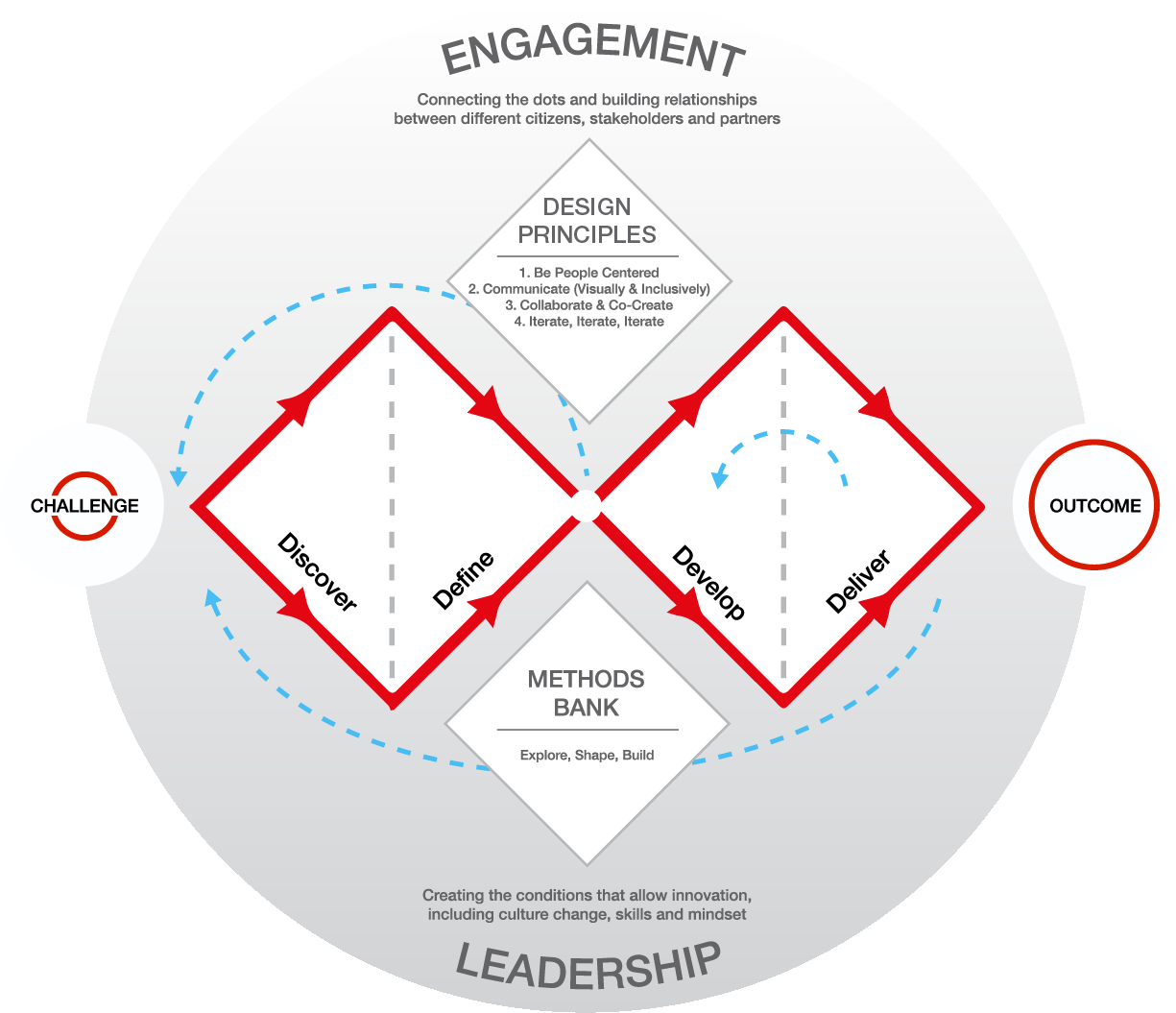
Source: Design Council, “Framework for Innovation,” licensed under Creative Commons Attribution 4.0 International (CC BY 4.0).
Critical questions to ask.
We use four critical questions derived from the thinking of Charles Kepner and Matius Fourie, and they have become some of the most useful tools in our toolkit.
*What results do you want to achieve?
*What symptoms do you want to remove?
*What risks do you want to avoid?
*What other contextual information is important?
These may appear simple, but the magic is not really in the questions themselves; it’s asking them through the lens of multiple stakeholders. Not just the most senior person in the room who holds the budget, but everyone who influences or is influenced by the problem you are trying to solve. Now we are really working on that first diamond!
*What results do you want to achieve?
*What symptoms do you want to remove?
*What risks do you want to avoid?
*What other contextual information is important?
These may appear simple, but the magic is not really in the questions themselves; it’s asking them through the lens of multiple stakeholders. Not just the most senior person in the room who holds the budget, but everyone who influences or is influenced by the problem you are trying to solve. Now we are really working on that first diamond!

We don’t all think the same.
This may be obvious, but again, in the haste to find a solution, we forget to listen to different viewpoints.
Divergent thinkers are brilliant at gathering information and seeing the big picture, but less so at concluding. ‘Analysis paralysis’ can occur, which may have burned people in the past, making us want to solve the problem quickly next time to avoid the pain!
Convergent thinkers are the other hand, find the links between parts of the problem and ways forward, but can be prone to skipping the creativity part.
Systemic thinkers often have deep, internally meaningful insight into complex situations, but because their thinking is not always visible, they don’t bring others along for the ride.
Divergent thinkers are brilliant at gathering information and seeing the big picture, but less so at concluding. ‘Analysis paralysis’ can occur, which may have burned people in the past, making us want to solve the problem quickly next time to avoid the pain!
Convergent thinkers are the other hand, find the links between parts of the problem and ways forward, but can be prone to skipping the creativity part.
Systemic thinkers often have deep, internally meaningful insight into complex situations, but because their thinking is not always visible, they don’t bring others along for the ride.
That is why we need all three thinking types, and the critical questions become a common language that facilitates these styles to work together, rather than be at odds.
Once we understand the problem, what do we need to do next?
We need to create a sense of urgency without manufacturing it.
Behavioural science helps here. A resource we often recommend is Daniel Kahneman’s Thinking, Fast and Slow(2011). Prospect theory, developed by Kahneman and Tversky, tells us something very uncomfortable about us as humans, in that we are almost three times more likely to do something and change to avoid a loss than we are to pursue an equivalent gain.
That is why we often ask questions like:
*What risks do we want to avoid?
*What is the risk if we do nothing?
This is not just information gathering. It sheds light on the real high-stakes conversations. The ‘loss’ might be reputational, revenue, operational or grounded in talent and wellbeing. Bringing these risks into the light and making them visible gives us the urgency to act together.
Behavioural science helps here. A resource we often recommend is Daniel Kahneman’s Thinking, Fast and Slow(2011). Prospect theory, developed by Kahneman and Tversky, tells us something very uncomfortable about us as humans, in that we are almost three times more likely to do something and change to avoid a loss than we are to pursue an equivalent gain.
That is why we often ask questions like:
*What risks do we want to avoid?
*What is the risk if we do nothing?
This is not just information gathering. It sheds light on the real high-stakes conversations. The ‘loss’ might be reputational, revenue, operational or grounded in talent and wellbeing. Bringing these risks into the light and making them visible gives us the urgency to act together.

How can we help?
We facilitate events to challenge thinking and achieve an outcome. We believe that the quality of the collaboration, discussion, and challenge whilst making the thinking visible, is key to driving the best possible outcome in the second diamond. We facilitate the environments, so the divergent thinkers explore, the convergent thinkers find the links, and the systemic thinkers go deep.
Our tools and techniques then help people innovate and drive the optimal outcomes.
You’ll be amazed at how different the answer looks when you have understood the question.
We help our clients think before they leap. The best interventions don’t happen the fastest; they happen when they are built on the clearest thinking.
Our tools and techniques then help people innovate and drive the optimal outcomes.
You’ll be amazed at how different the answer looks when you have understood the question.
We help our clients think before they leap. The best interventions don’t happen the fastest; they happen when they are built on the clearest thinking.